fiebichpvMay 17, 2016, 1:25am
Off Airport-again
There I was flying along peacefully at 1000 feet AGL on my way to an afternoon Mid-America Antique Group pot-luck fly-in. My contribution to the fly-in was two packages of cookies because that is about all that will fit in my AirBike's aft storage compartment. Sometimes I eat part of my contribution before loading the cargo or else it won't fit. It is a sacrifice I willingly make.
It was 55 degrees, a bit chilly, my AirBike was running nicely, it had plenty of power and I was a happy pilot. I had been flying for about 1-1/2 hours. One becomes complacent under these conditions. Then, like a sucker-punch in the kidneys, anti-aircraft gunfire exploded from the tree line. Flak bursting around me was causing my little WWI fighter to shake. Suddenly the engine lost more than half of its power, made a strange sound like it was strangling and barely responded to throttle inputs. I was going down!
Damn Huns! This time they were west of Wichita in the area where former hangar mates Bill Bailey, Wayne Clevenger, and Steve Ewing now reside. They were supposed to keep this area clear of intruders. I wondered if they were doing their jobs? In all fairness, they did clear the air, there were no planes in sight, all the commotion came from the below. Maybe their orders did not include destroying ground artillery?
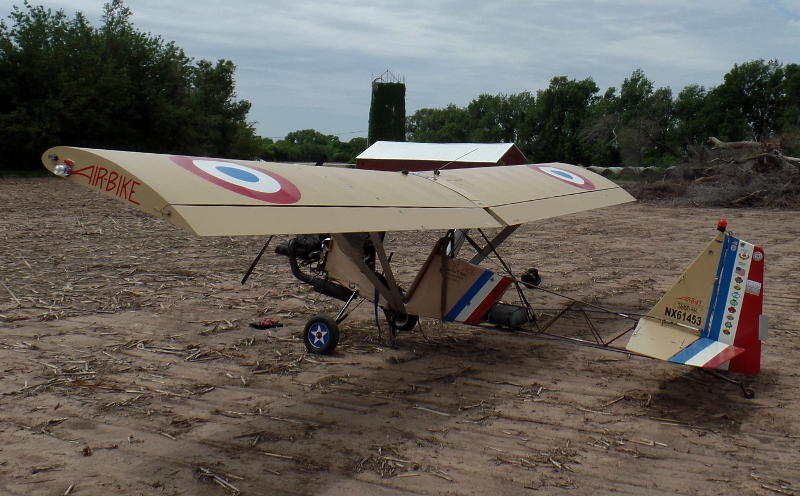
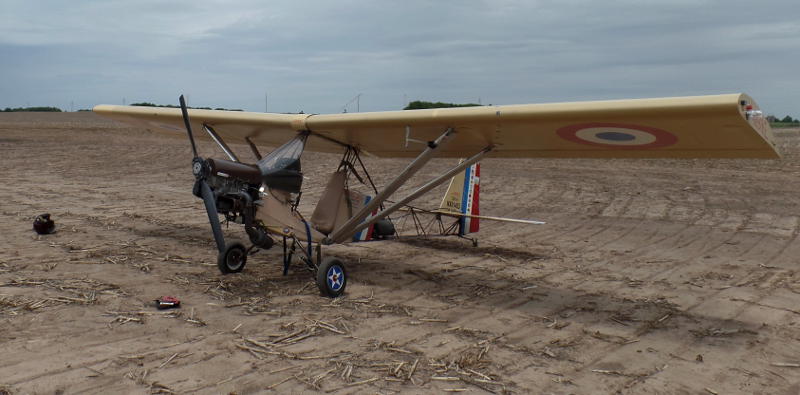
Kansas is mostly "airport." However, in springtime much of it is un-landable because of maturing wheat crops. Landing in a wheat field would flip a plane quicker than Paul Bunyan standing at a pancake griddle on even a bad day. In short order, I selected a harvested corn field allowed to go fallow from last year. Unfortunately the rows ran perpendicular to the wind. However, on the turn around edge of the field was one swath of corn planted perpendicular to the others. It lined up perfectly with the wind direction, I chose that as my landing strip.
Of the five off-airport landings I have made, this was the smoothest. Making that possible was the well-washed and fallow field. Either that or I am getting good at such emergency touchdowns? Humbly, I think I would say it was the latter.
As the plane slowed on the dirt field, I turned it towards a farm house and came to a stop about 100 yards away. I exited the cockpit and checked the damage. It must be a coincidence because the Hun's certainly are not so accurate that they can hit an engine's spark plug from 300 yards. But they did! It was blown clean out of its hole with such force that all the threads were stripped. This caused a major compression leak!
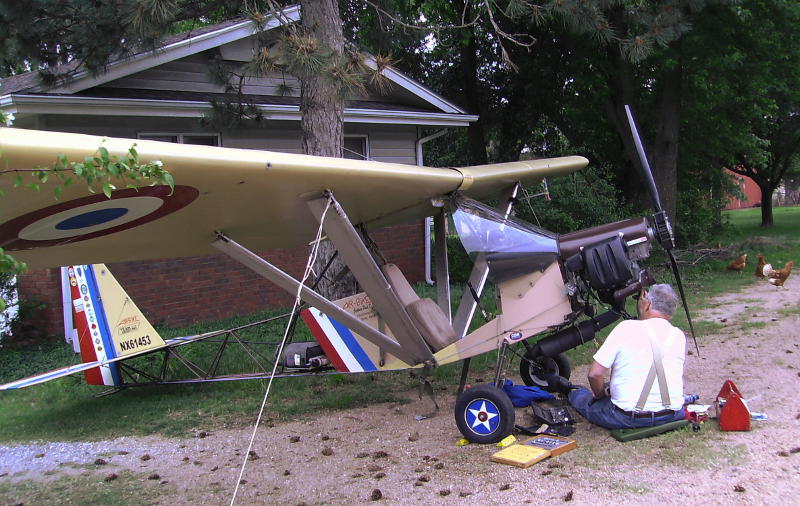
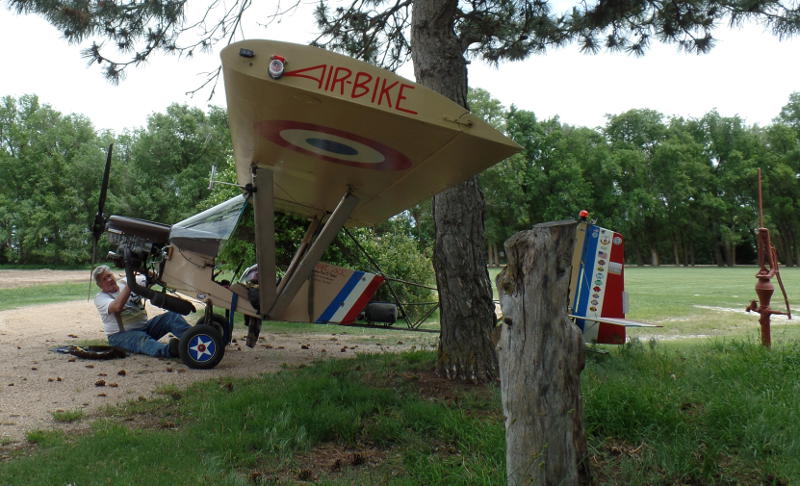
An elderly widowed farm wife named Delores, came out to investigate. Driving her steam-powered tractor, she hooked-up then pulled my plane close to her house and under a shade tree. She offered me water and encouragement. This also provided some excitement for her because she had never entertained a handsome, real pilot---ever. In addition to my good looks, it must have been the goggles, silk scarf, and leather jacket that impressed her. I may never know.
Using the widow's wireless, I signaled Vi, my base commander, of the predicament. This caused her to go into action. She unbolted a head from my spare 503 Rotax engine and would bring it along with other appropriate tools (like a torque wrench) to me 40 miles distant. While she was doing that, I used my on-board tools (yes, from that little Rotax plastic pouch) and removed the #1 cylinder head. During this time the farm wife watched intently and with some amazement at what was going on in her front yard.
Meanwhile, her free-range chickens wandered about clucking and pecking at the earth. I was careful not to step where they had been. I don't like chickens. Years ago I vowed not to make a meal of something that ate with its pecker.
My commander's approach was signaled by the rising dust cloud as she zoomed towards me on the gravel road in her trusty WWI rubber-tired wheeled vehicle.
Within an hour of the base commander's arrival, the replacement head was installed and all those wires and pieces of engine were back in place. A couple of pulls on the Armstrong Starter made that little Rotax engine spring to life. Following ten minutes of engine ground run, it was ready for the real test---flight.
Taxiing downwind far enough to have adequate "runway," I turned 180 degrees and did a full engine run-up. All was good! Feet on the rudder pedals, right hand on the stick, left hand on the throttle, and teeth gritted. I was ready for flight as was my AirBike! Pushing the throttle full forward, I quickly was on my take-off run bumping over decaying corn stubble. Soon my little plane was airborne just in front of its own dust cloud. I made a climbing circling turn. Once satisfied the repair was good, I flew a heading for my home airport 45 minutes away. As I flew over my base commander and the farm wife, I let out a stream of smoke for effect. Both women later said they thought that was a neat way to depart. My hope was that they would not think the engine was coming apart.
An hour before sunset my airdrome was in sight and I began the pre-landing check-list. Descending to 600 feet AGL, I entered the downwind pattern after crossing mid-field. Making left traffic, I entered base leg then final. With the throttle retarded, the airspeed dropped and my altitude decreased. The air was noticeably cooler as I neared the ground. Soon I was gliding with an idling engine and touching down on the sod runway. Safely home!
With my plane refueled, and the post-flight completed, I covered it with tarps and secured it in the hangar. After a couple of gentle pats on the cowl, I climbed into my own military vehicle for the drive home. This airdrome is miles from the nearest village wireless transmitter which makes communication impossible until I get closer. I will signal my base commander when I am within range.
Paul D. Fiebich
a.k.a. AirBike Ace
May 16 '16
Note: like all my stories, this one too is based on an actual event. It is mostly true, however, some of the details have been slightly embellished while others are outright lies. It is up to the reader to determine which is which. Good luck!
There I was flying along peacefully at 1000 feet AGL on my way to an afternoon Mid-America Antique Group pot-luck fly-in. My contribution to the fly-in was two packages of cookies because that is about all that will fit in my AirBike's aft storage compartment. Sometimes I eat part of my contribution before loading the cargo or else it won't fit. It is a sacrifice I willingly make.
It was 55 degrees, a bit chilly, my AirBike was running nicely, it had plenty of power and I was a happy pilot. I had been flying for about 1-1/2 hours. One becomes complacent under these conditions. Then, like a sucker-punch in the kidneys, anti-aircraft gunfire exploded from the tree line. Flak bursting around me was causing my little WWI fighter to shake. Suddenly the engine lost more than half of its power, made a strange sound like it was strangling and barely responded to throttle inputs. I was going down!
Damn Huns! This time they were west of Wichita in the area where former hangar mates Bill Bailey, Wayne Clevenger, and Steve Ewing now reside. They were supposed to keep this area clear of intruders. I wondered if they were doing their jobs? In all fairness, they did clear the air, there were no planes in sight, all the commotion came from the below. Maybe their orders did not include destroying ground artillery?
Kansas is mostly "airport." However, in springtime much of it is un-landable because of maturing wheat crops. Landing in a wheat field would flip a plane quicker than Paul Bunyan standing at a pancake griddle on even a bad day. In short order, I selected a harvested corn field allowed to go fallow from last year. Unfortunately the rows ran perpendicular to the wind. However, on the turn around edge of the field was one swath of corn planted perpendicular to the others. It lined up perfectly with the wind direction, I chose that as my landing strip.
Of the five off-airport landings I have made, this was the smoothest. Making that possible was the well-washed and fallow field. Either that or I am getting good at such emergency touchdowns? Humbly, I think I would say it was the latter.
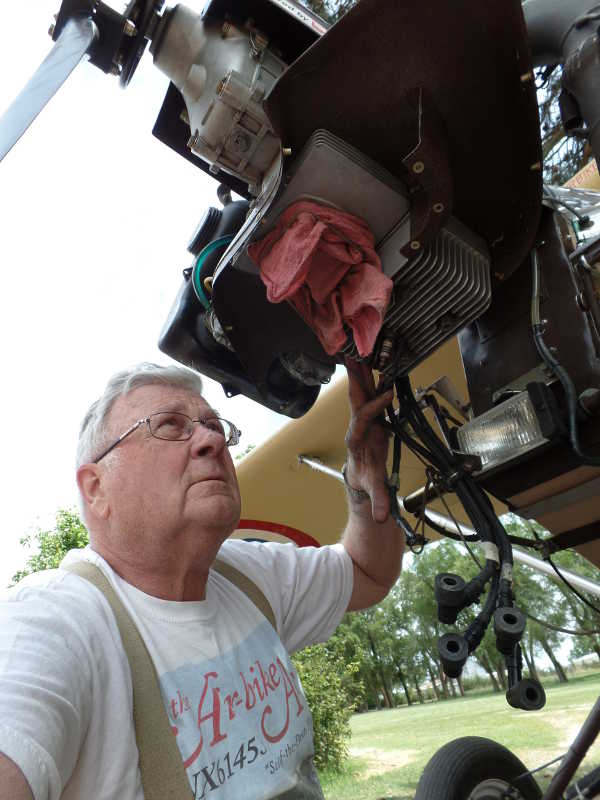
As the plane slowed on the dirt field, I turned it towards a farm house and came to a stop about 100 yards away. I exited the cockpit and checked the damage. It must be a coincidence because the Hun's certainly are not so accurate that they can hit an engine's spark plug from 300 yards. But they did! It was blown clean out of its hole with such force that all the threads were stripped. This caused a major compression leak!
An elderly widowed farm wife named Delores, came out to investigate. Driving her steam-powered tractor, she hooked-up then pulled my plane close to her house and under a shade tree. She offered me water and encouragement. This also provided some excitement for her because she had never entertained a handsome, real pilot---ever. In addition to my good looks, it must have been the goggles, silk scarf, and leather jacket that impressed her. I may never know.
Using the widow's wireless, I signaled Vi, my base commander, of the predicament. This caused her to go into action. She unbolted a head from my spare 503 Rotax engine and would bring it along with other appropriate tools (like a torque wrench) to me 40 miles distant. While she was doing that, I used my on-board tools (yes, from that little Rotax plastic pouch) and removed the #1 cylinder head. During this time the farm wife watched intently and with some amazement at what was going on in her front yard.
Meanwhile, her free-range chickens wandered about clucking and pecking at the earth. I was careful not to step where they had been. I don't like chickens. Years ago I vowed not to make a meal of something that ate with its pecker.
My commander's approach was signaled by the rising dust cloud as she zoomed towards me on the gravel road in her trusty WWI rubber-tired wheeled vehicle.
Within an hour of the base commander's arrival, the replacement head was installed and all those wires and pieces of engine were back in place. A couple of pulls on the Armstrong Starter made that little Rotax engine spring to life. Following ten minutes of engine ground run, it was ready for the real test---flight.
Taxiing downwind far enough to have adequate "runway," I turned 180 degrees and did a full engine run-up. All was good! Feet on the rudder pedals, right hand on the stick, left hand on the throttle, and teeth gritted. I was ready for flight as was my AirBike! Pushing the throttle full forward, I quickly was on my take-off run bumping over decaying corn stubble. Soon my little plane was airborne just in front of its own dust cloud. I made a climbing circling turn. Once satisfied the repair was good, I flew a heading for my home airport 45 minutes away. As I flew over my base commander and the farm wife, I let out a stream of smoke for effect. Both women later said they thought that was a neat way to depart. My hope was that they would not think the engine was coming apart.
An hour before sunset my airdrome was in sight and I began the pre-landing check-list. Descending to 600 feet AGL, I entered the downwind pattern after crossing mid-field. Making left traffic, I entered base leg then final. With the throttle retarded, the airspeed dropped and my altitude decreased. The air was noticeably cooler as I neared the ground. Soon I was gliding with an idling engine and touching down on the sod runway. Safely home!
With my plane refueled, and the post-flight completed, I covered it with tarps and secured it in the hangar. After a couple of gentle pats on the cowl, I climbed into my own military vehicle for the drive home. This airdrome is miles from the nearest village wireless transmitter which makes communication impossible until I get closer. I will signal my base commander when I am within range.
Paul D. Fiebich
a.k.a. AirBike Ace
May 16 '16
Note: like all my stories, this one too is based on an actual event. It is mostly true, however, some of the details have been slightly embellished while others are outright lies. It is up to the reader to determine which is which. Good luck!