ETLB Squawk Forums — Archive

Community archive · preserved 1076 threads
Building and Flying Related Boards › miniMax, Hi-Max, and AirBike General Discussions
Pitot head positioning
11 posts
Keith103June 18, 2018, 5:25pm
My whole project is geared for operating the airplane out of an enclosed trailer.  
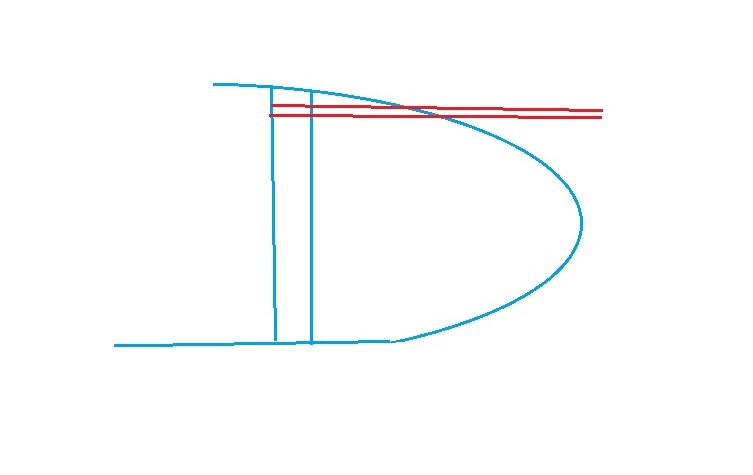
I was looking for a location for the pitot head which will cause least damage to the pitot tube. Is the following placement at wing tip an acceptable way to go? if the tube sticks out any longer, the storage area in the trailer for the wings has to be wider just for this small tube which is sticking out.

The actual pitot opening is likely to be about 2 to 3 inches away from the closest surface of wing.
I am assuming that the airflow is disturbed the most at the first few inches closest to the wing surface.

This makes the flexible tubing connection to the ASI about 14 feet long.
Is this too long a tube, meaning will the dynamic pressure decay over such a long tube leading to reduced read out ?

Thanks for any suggestions / comments.

attachment
radfordcJune 19, 2018, 12:25am
In a sealed tube pressure is the same everywhere....there is no "decay" of the dynamic pressure at the end of a long tube.

If you need a longer pitot head you can make a tube that fits over the shorter tube and extends forward as far as needed.  Use tape to lock and seal the extended tube in place.
Keith103June 19, 2018, 6:15am
Quoted from radfordc In a sealed tube pressure is the same everywhere....there is not "decay" of the dynamic pressure at the end of a long tube.
If you need a longer pitot head you can make a tube that fits over the shorter tube and extends forward as far as needed.  Use tape to lock and seal the extended tube in place.


Thanks for the response. I am relieved to hear that a long flexible tube will not  alter the air speed reading.

The idea of the slide-out tube to extend length is also great. I bought the inexpensive pitot tube from Ac Spruce. This has an OD of 1/4 inch, and I have about 12 inches length of AL tube  (Id 1/4 ) left over from the bushing job for rear spar pins. They are a perfect fit, so I think I will try out this idea of a slide out tube.

Thanks
PUFFJune 19, 2018, 2:28pm
Keith:  is this a Hi Max or a Mini Max you're speaking of?
Keith103June 19, 2018, 3:39pm
Quoted from PUFF Keith:  is this a Hi Max or a Mini Max you're speaking of?


It's a mid wing Max 103.
PUFFJune 20, 2018, 12:05pm
OK, just asking.  Just make sure you keep it out of prop wash and forward of the wing just a Tee Tee bit.
LSaupeJune 25, 2018, 12:24pm
Beware of low spots in the tubing that can collect moisture (even due to condensation).  Also looks like you might be in a high speed zone that close to the leading edge, so an extension might be warranted.  Keep an eye in it in flight of you can as you may have a bit of cross flow (and vortex shedding) neat the connector which may cause vibration.
Keith103June 25, 2018, 6:48pm
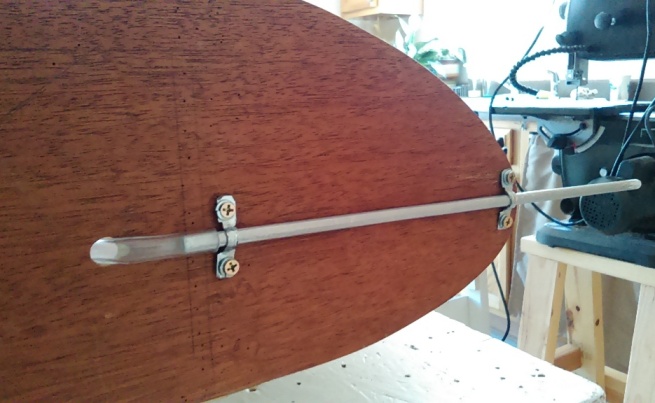
Some pictures of how I mounted the pitot tube.  The hardest part was getting the correct size clamp. Most clamps I bought were over-kill for this tiny 1/4 OD tube. I made my own from some picture frame hardware lying in my scrap heap.

Pitot tube opens out in front of wing ( ahead of wing by 4  and 1/2 inches). I tilted the tube a wee bit down at front end to compensate for the wing's incidence.

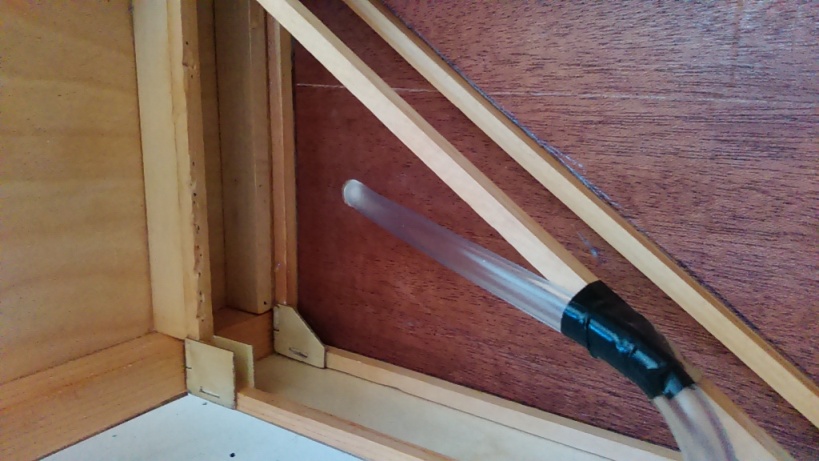
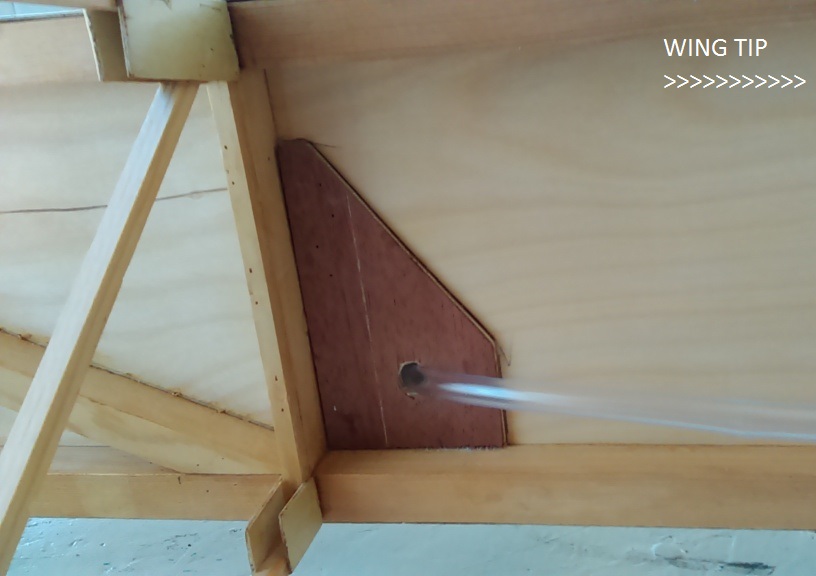
The flexible connecting tube runs behind the main spar. I routed the tube to the front side of the main spar into the D section of leading edge, as it reaches the 2 nd inboard rib,  because I thought it may be more convenient if the tube enters the fuselage ahead of fuselage-station 2-upright, right underneath the instrument panel.

It is easy to replace the pitot head in case of damage- just unscrew the 2 clamps and insert the new tube. I will keep a spare pitot head in stock. It is only a question of time before I bump into it, considering its location.


attachmentattachmentattachment
beragoobruceJune 27, 2018, 11:44am
If you're worried about you (or an over enthusiastic onlooker) damaging the pitot tube, here's a trick I've seen on a couple of planes in my old hangar.

The pitot is cut short where it comes out of the wing (or strut, or wherever). The cut length is reattached using a short length of thick walled rubber tubing (black fuel hose?), clamped at each end. That way, the pitot is aligned as before, but can move if bumped & spring back, without damage.

Bruce
Keith103June 27, 2018, 6:50pm
Quoted from beragoobruce If you're worried about you (or an over enthusiastic onlooker) damaging the pitot tube, here's a trick I've seen on a couple of planes in my old hangar.

The pitot is cut short where it comes out of the wing (or strut, or wherever). The cut length is reattached using a short length of thick walled rubber tubing (black fuel hose?), clamped at each end. That way, the pitot is aligned as before, but can move if bumped & spring back, without damage.

Bruce


Thanks, good idea.
ScottLuckmanJune 29, 2018, 2:11am
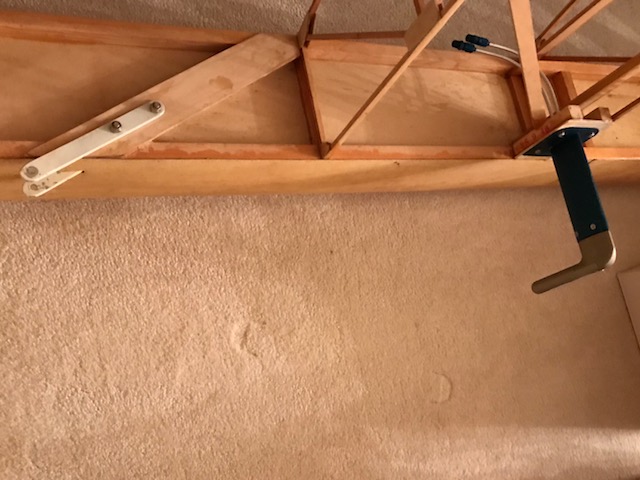
Do you think this will work? My Pitot tube is 7" below the bottom of the wing and 6" behind the LE and outboard of the wing struts.


attachment