Building and Flying Related Boards › Flying Stories
Color Flight...and Fright!
20 posts
fiebichpvOctober 29, 2018, 2:13am
Today's late afternoon weather was another of those that just begs for pilots to get airborne. Blue skies, light and variable wind, temperature in the high 60's; the perfect combination for any pilot to find an excuse to fly.
The color flight part
Already at our field were two jump planes taking skydivers to their stepping-off altitude, two other planes were occupied each by a CFI and a student, a fellow taxied by in his Nieuport and another in his Pietenpol followed by a gal in a yellow Cub. Two other fellows with powered parachutes were kiting up. What a great place to be!
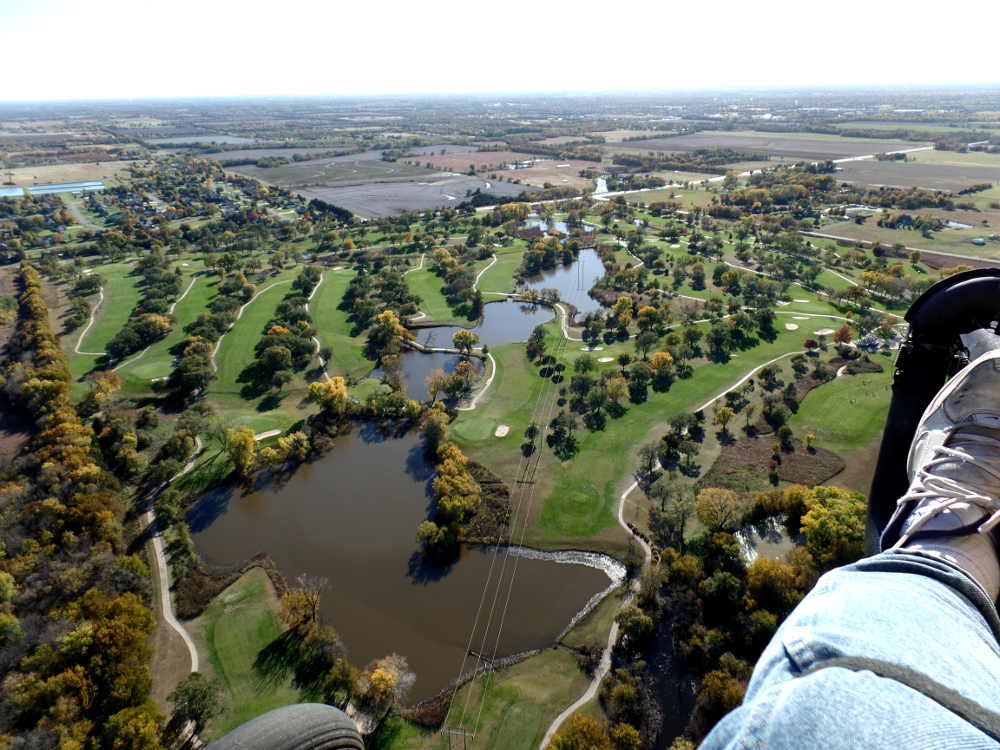
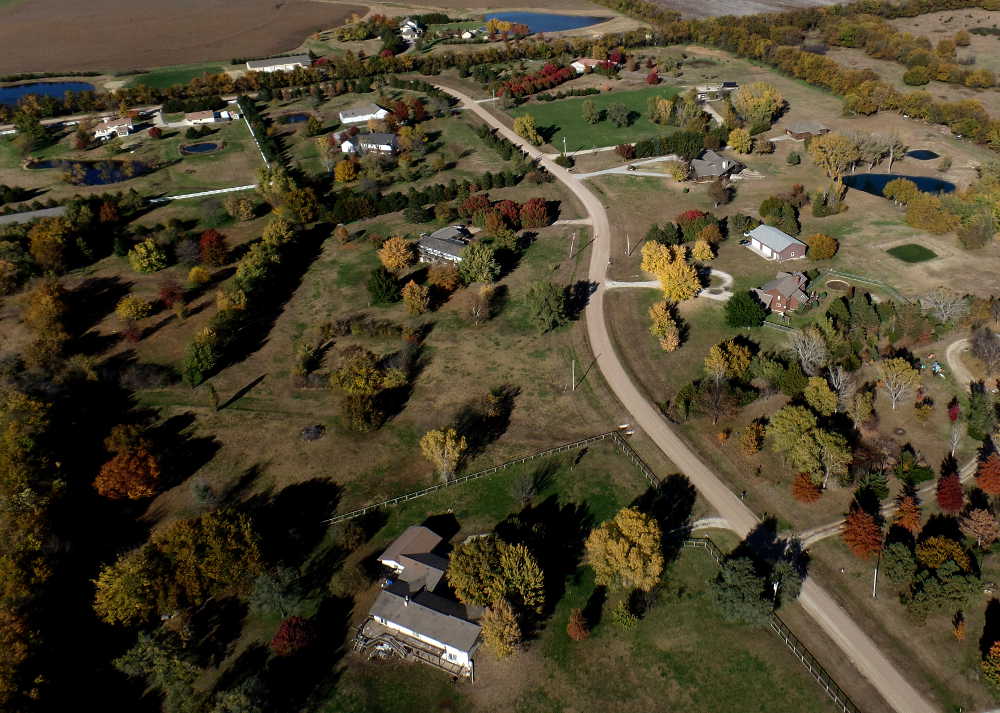
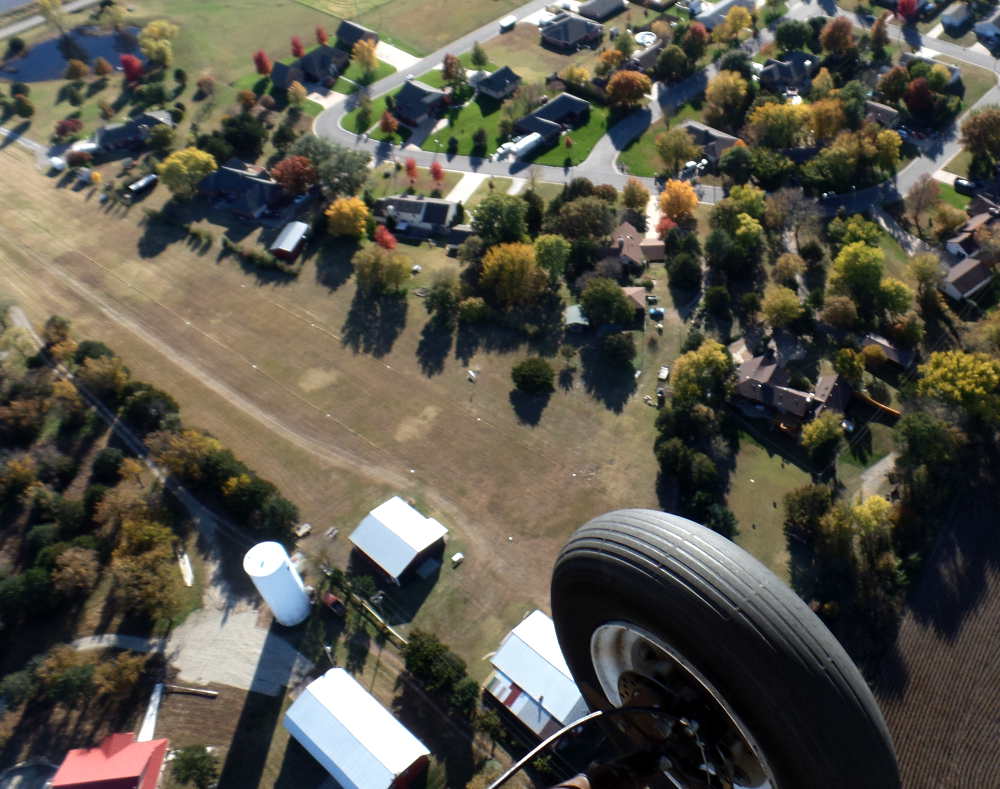
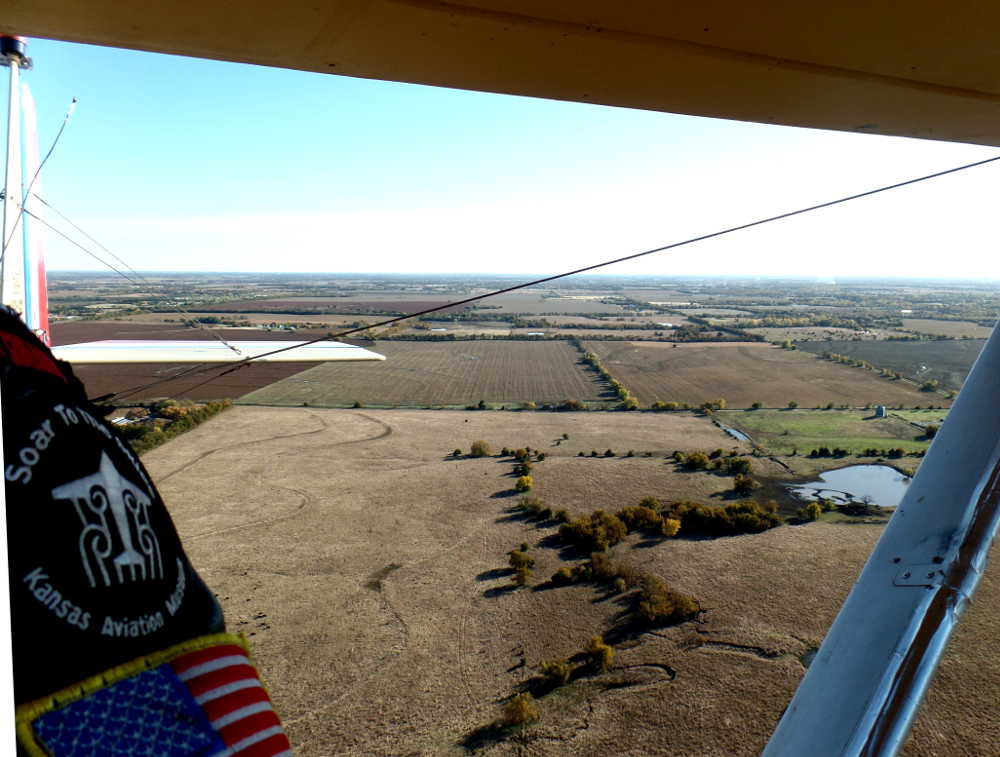
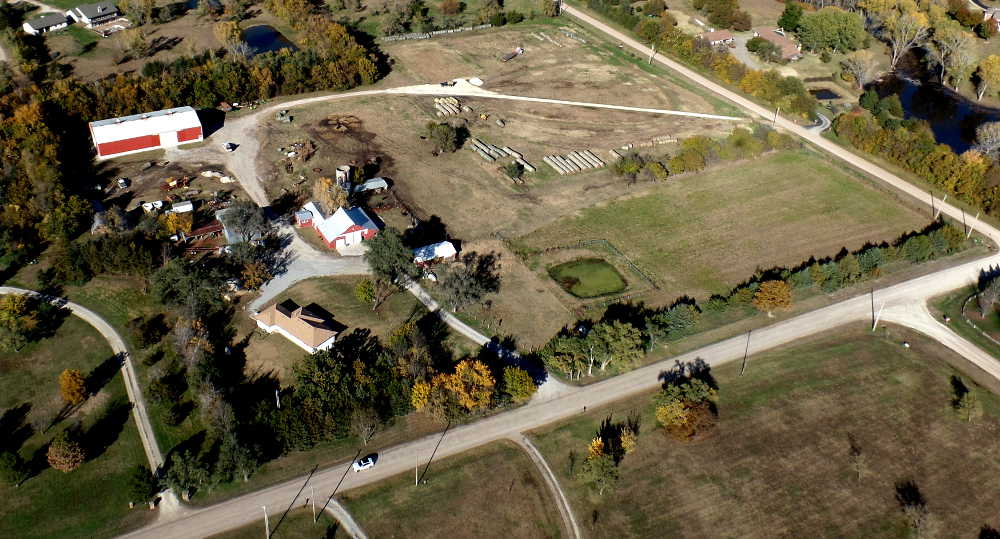
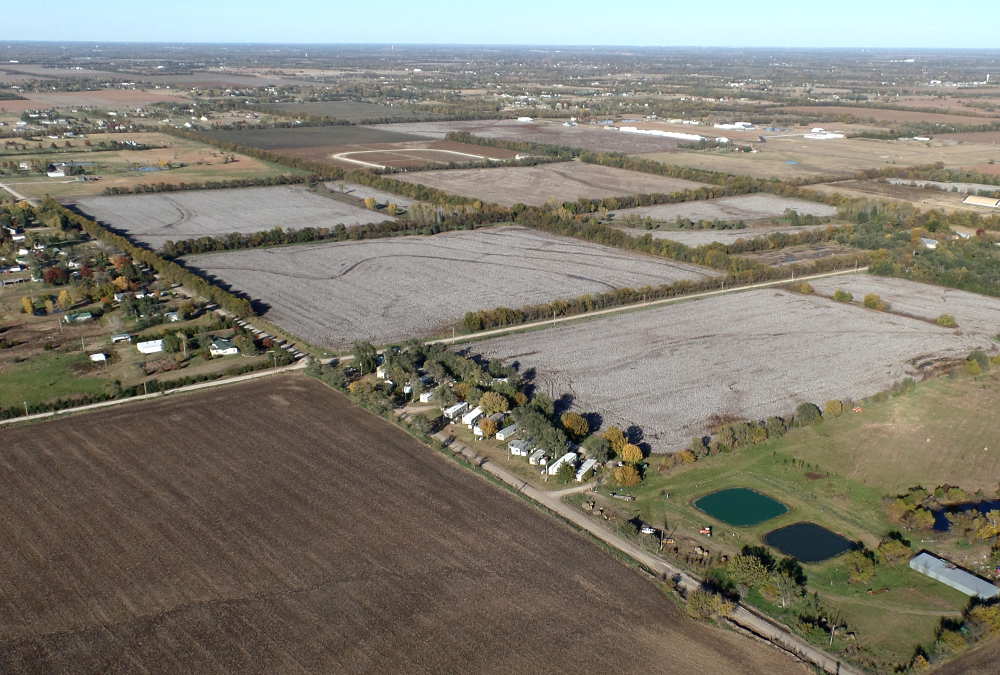
After fueling up and doing a pre-flight I was off on my own mission: a color flight during which I was hoping to photograph the Central Kansas region's peak color display. Although mostly browns and reds, we do have some yellows that add a bit of "punch" to the landscape. The photos below describe the area over which I flew, the captions above each photo provides a brief description.
Although we have already had our first 3/4" snowfall a week ago, the photo of the white fields is not snow. It is cotton. A couple of down to earth photos give you a better look at the white stuff. I hope you are enjoying good weather and many pleasant flights.
The flight fright part
Having satisfied my desire to fly and take photos I returned to my home field and entered the downwind for grass runway 01. While doing so I announced my position on the handheld radio; Downwind, Base, then Final. And suddenly, Final was really final. At about 100 feet AGL, My engine quit... as in seizure!
Immediately the stick went forward and I aimed for the runway threshold instead of some distance along its length. Just prior to becoming a runway lawn dart I pulled back and flared for a one-bounce landing and rolled to a stop between the asphalt and grass runways. I felt fortunate to be down safe and without damage as staying on a runway was really not a goal, I had a lot of area to work with. The area where I rolled to a stop might as well be a runway, only difference is the grass is not mowed as short.
I immediately made a radio call to the plane waiting for me to land so he could take off. He then took the runway and departed.
Examining the pistons, the rear one is ok, the front one is scared with metal transfer. It was a seizure all right. Right now I don't know why as the temp gauges did not indicate a rise, the carb bowls were full of fuel, there appeared to be no debris in the fuel filter or line. The fuel is pre-mixed 50:1 with Penzoil. My decent from 1000 feet AGL and pattern entry took about two minutes and I had pulled the throttle back to 5500 RPM while in the pattern then to 3500 on final. I'd welcome your ideas as to why this happened. I will need to rebuild the front cylinder now instead of going flying. Damn ##$%@!
Paul Fiebich
texasbuzzardOctober 29, 2018, 10:39am
Paul glad you made it back safely. You might have read this already.
http://curedcomposites.com/twostroke.html. very good reading.
Monte
fiebichpvOctober 29, 2018, 12:30pm
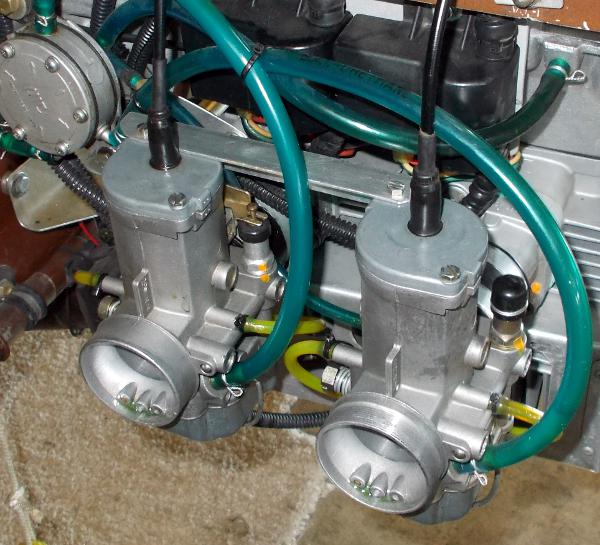
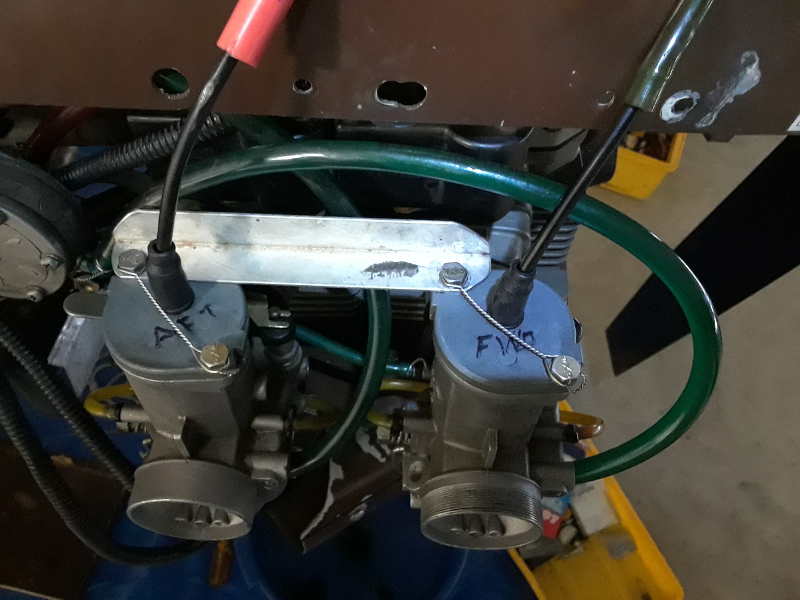
Thanks Monte, lots of good information in that read. My pattern and landing approach, although different than the article describes is what I have used for the last 1100 flight hours. I know that I could not remain in a normal pattern (downwind, base leg, final) if only on idle as the article suggests. I did find an aberration during my preliminary check of the engine, that being the metal strap (see attached photo) joining the two carburetors was missing the screw attached to the front carb. That allowed the carb to tilt which may have had an effect on the float operation causing it to shut the fuel off to the front cylinder. Unfortunately, those screws are not visible during a pre-flight because the silencer blocks the view. From now on, I will use screws that can be safety wired.
The other screw on that carb top was intact, however it may be possible that the missing screw caused an air leak at the carb cover. But there is an o-ring gasket that should have prevented a leak even with one of the two screws missing.
The strap photo is an old one, the blue fuel line used as a pulse line has been replaced with the recommended one as suggested by someone on this board several years ago.
This situation is so irritating especially since I take such care of my plane and the repair keeps me grounded and is expensive. Agrrruh!
Paul
aeronutOctober 29, 2018, 4:04pm
Glad you made a safe landing.Hope you are able to rebuild and continue to fly and take great pictures and continue your writing. You are one of the vert best contributors to this website.Best wishes.
never surrender; never give-up
Bob HoskinsOctober 29, 2018, 4:18pm
Hi Paul
Thanks for the pictures. Sure pretty country out there. Am so sorry you are having problems again with the engine. Also glad you are OK. The fact that the carb rotated in the rubber mount may be the key. Probably ran lean on ya causing the problem. On engines, specially 2 stroke, you have got to make sure nothing can come loose. The vibration frequency is very high. Remember at 5500 rpm you are producing 11,000 impulses per min. Also George's paper is very good on the 2 stroke engine. At least it will be mostly cold weather while you repair the engine. Worse if it was in the middle of the summer. Hang in there Paul. Always love your stories and pictures. You help a great deal in keeping the board going.
Bob
Fly safe and have fun.
ITman496October 29, 2018, 9:34pm
That link was a good read, and actually has me worried. So descending at high speed with partial throttle can really destroy an engine that is otherwise tuned properly? Is this what an oil injection pump can bypass the danger of?
Glad you landed okay and well! Being that I'm about to get into this hobby myself, I'm very terrified of what happened to you happening to me!
texasbuzzardOctober 29, 2018, 11:20pm
I believe oil injection is a plus on a properly tuned 2 stroke because it actually adds and reduces oil with throttle and rpm changes. This really helps when you are descending with a high rpm and low throttle situation which is where the lean problem occurs. I installed oil injection on my 503 last month and after trying different decent situations no problems. Time will tell.
Monte
ITman496October 30, 2018, 12:15am
I agree, and I'm liking the sound of it more and more as time goes by.
I think its time to begin hunting for the parts to add oil injection to a kawi 440..
Bob HoskinsOctober 30, 2018, 12:27am
Hi
Just a thought here guys. Oil injection will not cure the low throttle problem. You are closing the throttle with the forward speed turning up the rpm of the engine, with low oil output from the pump? Same as if oil is in the fuel. your lowering the oil to the engine when the rpm is high. I think you should read what George wrote again. George and I have had many differences here on this board, but on this I think he is right on. 2 strokes are very reliable, but have to be fed properly. Now, this is my 2 cents, LOL.
Bob
Fly safe and have fun.
ITman496October 30, 2018, 12:29am
Doesn't the pump output oil based on RPM of the engine, not how much gas is being fed? Or am I misunderstanding their operation?
Bob HoskinsOctober 30, 2018, 1:11am
IT
The ones I am familiar with are variable displacement. Engine turns the pump, throttle controls the amount of oil pumped.
Bob
Fly safe and have fun.
ITman496October 30, 2018, 1:42am
Oh, interesting. I guess I really don't understand two-strokes.. I'll just stay pre-mix and watch out for that partial throttle situation and make sure nothing else vibrates loose or becomes weird.
PUFFOctober 30, 2018, 12:04pm
I thought Team recommended slips for descent? I've never done it in a Minimax, however.
fiebichpvOctober 30, 2018, 12:19pm
Bob, thanks for your input regarding the rotated carb. I believe you are right in that conclusion. The rotated carb worked properly throughout my one hour flight, the problem occurred during the pattern work. I think the right turn to enter downwind then the long sharper left turn caused the floats in the tilted carb to shut off fuel/lubrication to that cylinder. That is the one that seized. This engine out resulting from the tilted carb is a one time event. After rebuilding that cylinder, I will us safety wired screws on those carb top screws.
I appreciate the comments others have made too, this is one of the valuable aspects of this Board; sharing information so we each don't have to "invent the wheel." All my 1100+ flying has been behind two strokes, problems have always been with associated equipment, not the engine itself (plugged fuel filter, protective tape on the prop slipping off, fouled spark plugs, etc.)
Paul Fiebich
ITman496October 30, 2018, 12:40pm
I think you have helped contribute to the safety of everyone else here by sharing the details of this. I know for a fact that I was not aware of some of this stuff, and for sure I will be going around and replacing critical hardware like what holds these items on with safety wired hardware.
Bob HoskinsOctober 30, 2018, 11:57pm
Hey Paul;
You be welcome. I think everyone here would help when they had some info that could help someone. That is what this board was meant for. Everyone has an opinion, and it should always be positive!. So, Paul get that engine back up and running you "positively" need to get back flying, LOL.
Bob
Fly safe and have fun.
fiebichpvDecember 18, 2018, 5:16pm
Engine rebuild follow-up
Following replacement of the seized piston/cylinder with one complete unit from a used engine, (all specifications are within operating ranges). I ran the engine on the ground for 2 hours at various increasing RPMs. Yesterday, I made a .7 hr flight staying in the pattern and two take offs and landings. All seems to be OK. I have confidence in the engine.
The attached photo shows my solution to preventing either one of the carburetor top cover bolts attaching the strap that joins the two carbs from coming loose and falling out, thus permitting the carbs to rotate. The rotated carb allowed the floats to shut off fuel/lubrication to that cylinder. Safety wiring the bolt pair together will solve that problem.
In retrospect, I cannot imagine the problem happening if it were not for negligence on my part. That is, not sufficiently tightening the carb cover bolts and the hose clamps securing the carbs to their mounting flanges following servicing them. However, the safety wire does now serve as a physical back-up and a visual clue, I would suggest everyone do this even if just for peace of mind.
Paul Fiebich
(smart too old)
Dick RakeDecember 18, 2018, 6:16pm
Good plan Paul.....I'll do the same thing. Thanks
Bob HoskinsDecember 20, 2018, 8:44pm
Hi Paul.
I don't believe those carbs are going anywhere, LOL. Great job. Safety wire everything you can. Will never hurt.
Bob
Fly safe and have fun.
radfordcJanuary 7, 2019, 3:07pm
Quoted from ITman496
Doesn't the pump output oil based on RPM of the engine, not how much gas is being fed? Or am I misunderstanding their operation?
Here is how the oil injection system works:
https://www.cps-parts.com/cps/pdf/Part45.pdf