Building and Flying Related Boards › Flying Stories
Forced landing yesterday.
21 posts
radfordcAugust 15, 2019, 9:51pm
It was a great flying day and I took off in the Eindecker for a short local flight. I was trying to keep at 2000 MSL and the thermals were lifting me higher and closer to the Class B floor at 2400. I throttled back significantly and let the plane sink back down to 2000. When I throttled the Rotax 503 back up the engine started backfiring and wouldn't pick up rpm. There was a private grass strip near me and I made a precautionary landing there. I worked the throttle up and down on the ground and every thing seemed normal. I thought maybe the problem had been a fouled plug or the like. Since I had a long runway to work with I decided to try a takeoff and see how it went. Initially, the engine went to full power and I was in the air and climbing normally. At about 500 AGL I made a turn to head back to my home field about 10 miles away. Just then the rpm started dropping again. I immediately set up for a down wind landing back on the runway.
My friend lives on that airport and he gave me a ride back to my hangar where I collected the trailer and retrieved the plane.
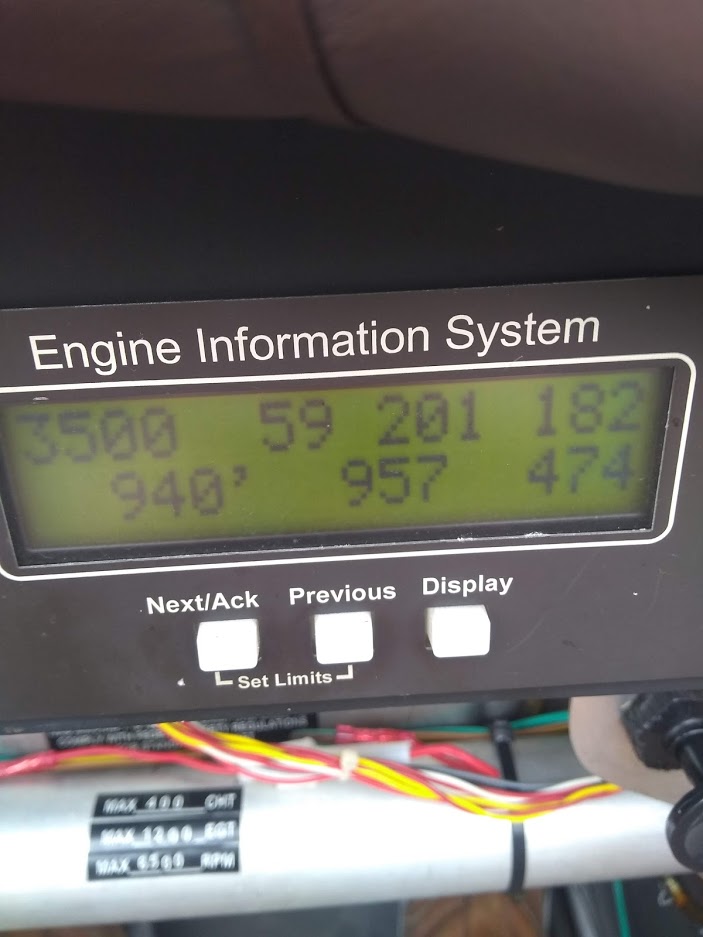
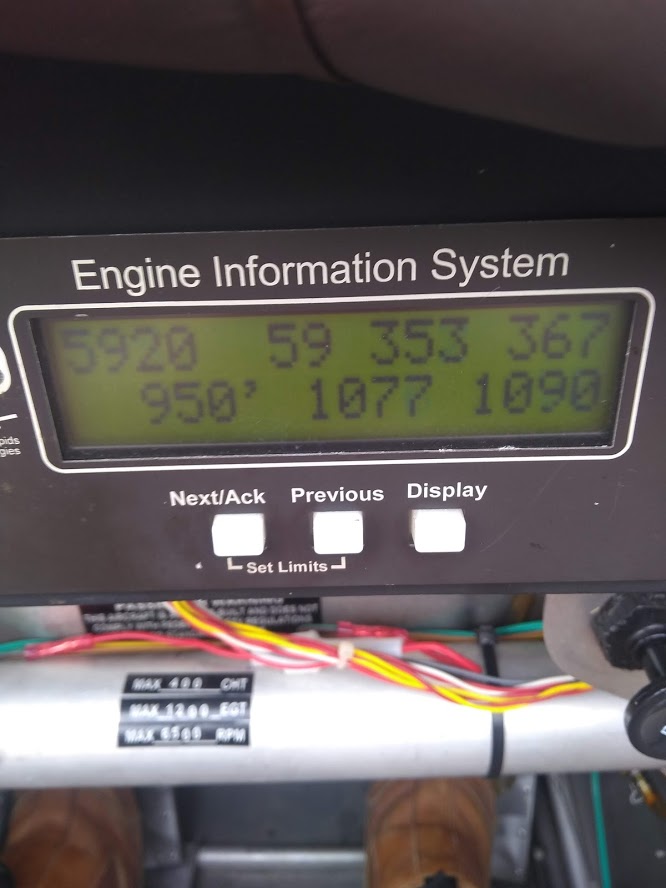
The only real abnormal thing I saw was that one EGT was significantly higher than the other. Number 1 was near 1100 while number 2 was near 950. CHTs were about 350. I've never experienced a problem quite like this with a Rotax. Usually they either run good or just quit.
texasbuzzardAugust 15, 2019, 11:56pm
Glad you were able to find a suitable landing area and make two safe landings. Time to tether the plane and examine the engine. Should not be hard to find the problem.
Monte
The TermiteAugust 16, 2019, 12:18am
A difference of 150 F between EGTs is interesting. Was that in cruise? Probably indicates a mixture issue.
I would check the hi-speed jets for blockage, and the mid-range jet needles to make sure they are both set the same.
Check the floats in the carbs.
Pull & check spark plugs, replace if needed. I use the NGK iridium plugs, and get 50 hrs plus out of them.
Check carb synchronization.
https://www.youtube.com/watch?v=PiZh1Ox1vmAAnother thought: This is a dual carb 503, correct? Do you have one large air filter for both carbs, or two smaller separate ones? If two, one could be dirtier than than other.
texasbuzzardAugust 16, 2019, 9:28am
Plug color will tell a lot about the mixture but to me the ignition might be the problem. I had a forced landing on my 277 due to a broken wire under the flywheel. Check all of the wiring by visual inspection and then pull on them as the break cannot always be seen.
Monte
PUFFAugust 16, 2019, 11:39am
don't forget carb boot as well. wiggle them around, check for looseness and cracking.
nathan.bissonetteAugust 16, 2019, 2:22pm
You made The Impossible Turn for that second landing? Way to go!
Glad to hear you and your bird are alright.
aeronutAugust 16, 2019, 5:19pm
I also am glad that you were able to make two successful precautionary landings. Hope you can figure out what is going on with the 503.Was the day humid?
never surrender; never give-up
radfordcAugust 16, 2019, 8:33pm
Quoted from aeronut
I also am glad that you were able to make two successful precautionary landings. Hope you can figure out what is going on with the 503.Was the day humid?
Temp 83, dew point 61, RH 47% so unlikely that icing was the problem....but you never know. When I landed the problem seemed to clear up but came back quickly on takeoff.
We're taking the plane to a WW I living history display next week so I won't start troubleshooting until after that. I'm guessing a fuel/mixture problem and hopefully not something bad going on internally. I've experienced several seizures in the past and this didn't act like that.
radfordcAugust 30, 2019, 4:42pm
More to the story.
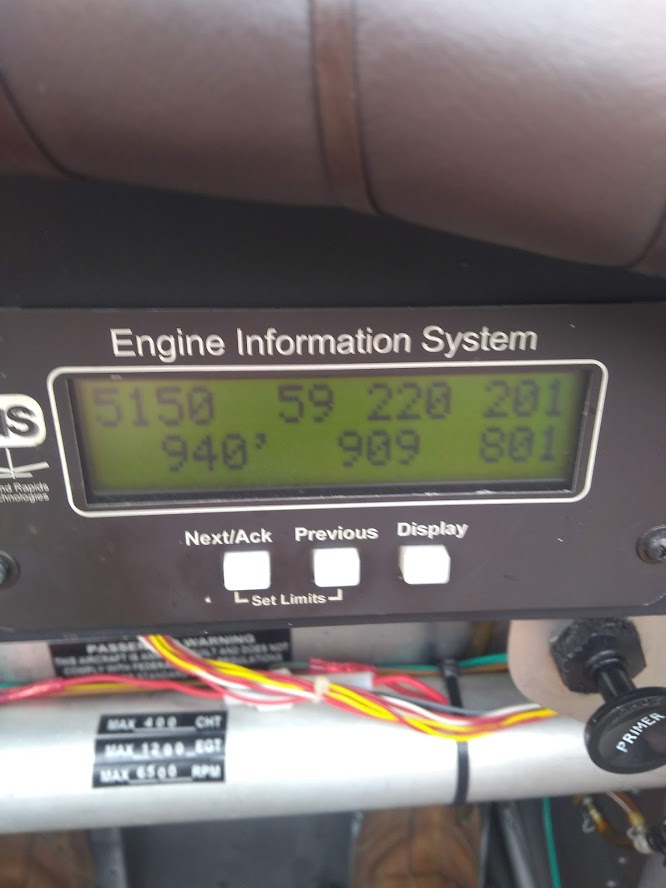
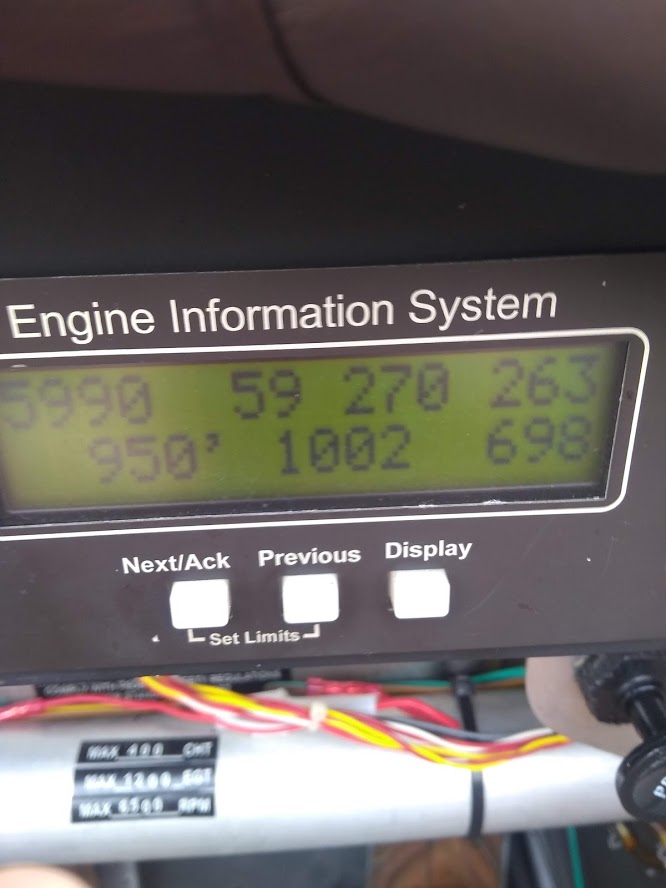
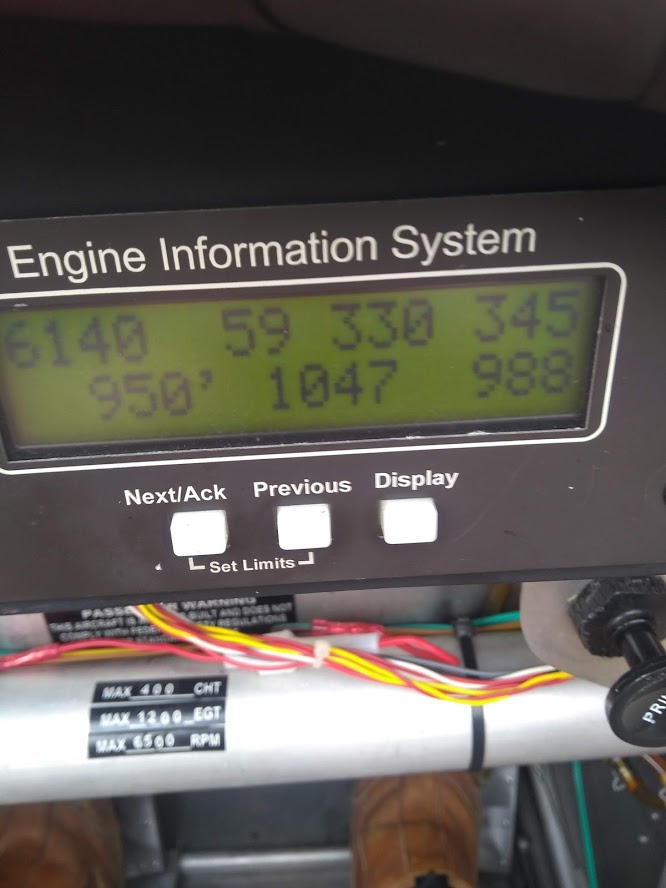
I tied the plane down and did an engine run to better observe the engine monitor without having to focus on flying the plane and making a safe landing. I ran the engine up slowly to full throttle over the course of about 5 minutes. During this time I noticed the number 2 EGT was not stable and would vary by up to 300 degrees from number 1. At this time I wasn't sure if it was a real engine problem or a problem with the EGT gauge itself. I finally got the engine up to max static rpm of 6140 and the engine readings looked pretty good. After only a couple of minutes at full power the rpm suddenly started dropping....I pulled the throttle to idle and the engine quit. Pretty much the same thing I saw in the air.
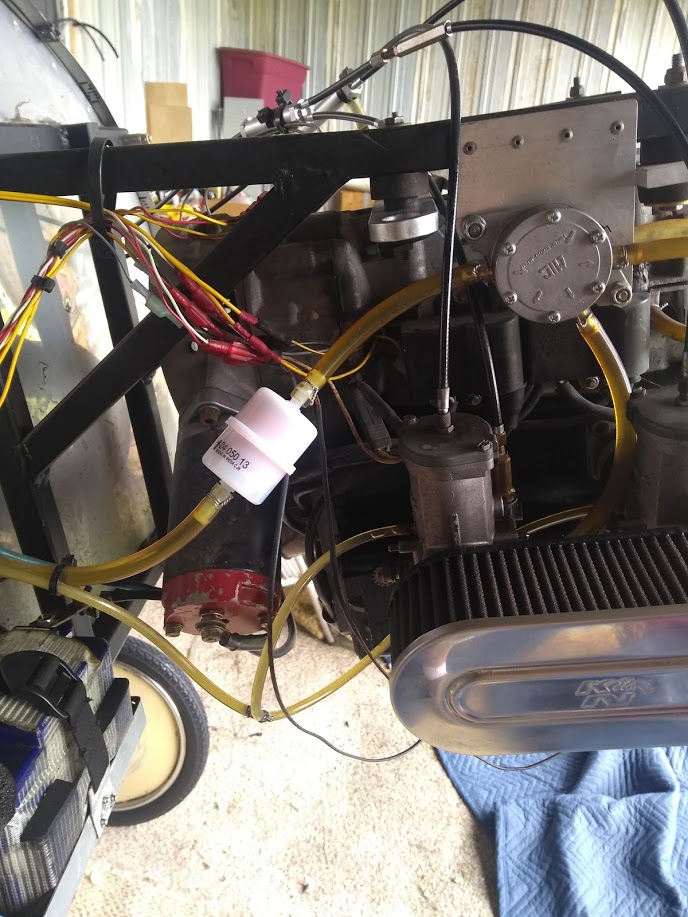
I started the inspection by checking fuel flow from the tank to the fuel filter....normal, no problem. Then I checked fuel flow at the outlet of the fuel filter...ZERO! Okay, that's not good and tells me that I neglected replacing the fuel filter soon enough. Since the engine only had less than 30 hours installed in the Eindecker, and the filter looked OK, I hadn't replaced it yet. Lesson learned, replace the filter annually even if you only flew for 10 hours or less.
radfordcAugust 30, 2019, 4:45pm
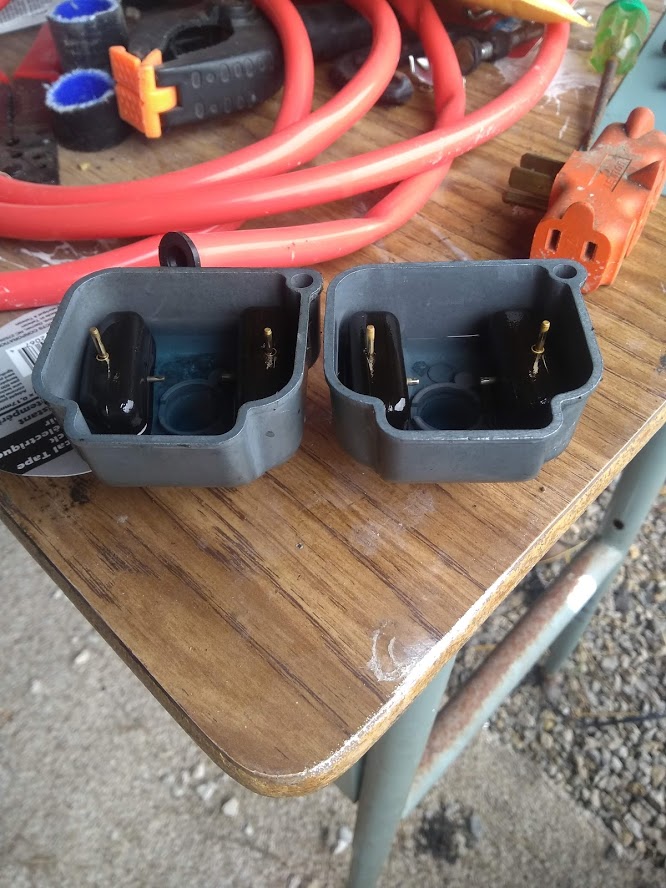
I also pulled the carb bowls and confirmed that they weren't getting enough fuel. You can see that bowl number 1 is low and number 2 is much too low. I'm sure this is related to the strange EGT readings for number 2.
I need install a new filter and do another test run and hopefully the problem won't be there. Fingers crossed.
texasbuzzardAugust 30, 2019, 9:41pm
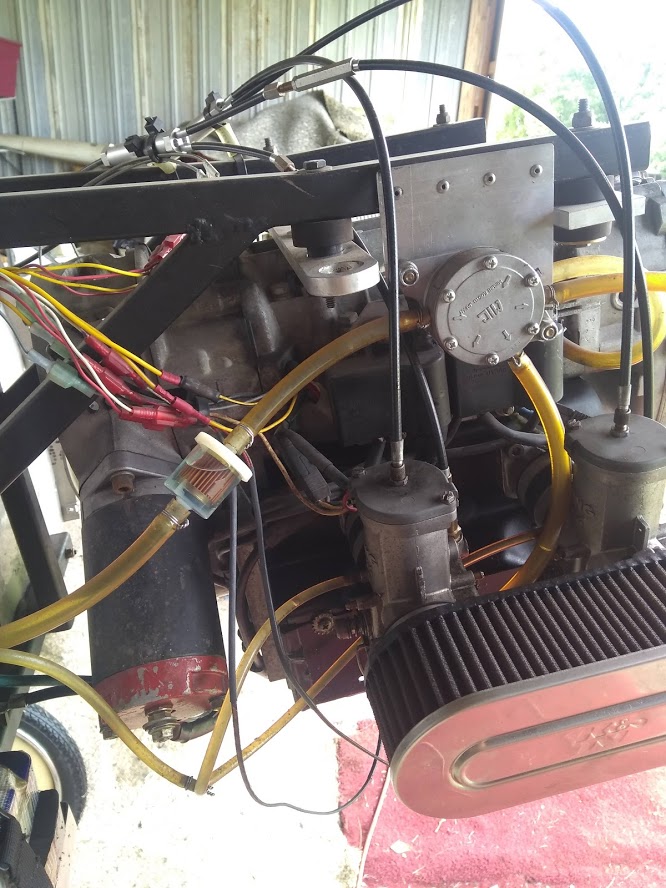
Glad you solved it. I noticed that the cable adjustment on top of the carbs do not have rubber boots and they are are different levels. The boots keep air from bleeding into the carbs which can lean the engine. Have you balanced the carbs...might be your egt differential reading.
Monte
radfordcAugust 30, 2019, 9:52pm
Monte, I had not given them a thought. Up til now the EGTs have been balanced and perfect. I know the boots are supposed to be there but I'm not so sure that an air leak there is critical.
They are at different levels because I balanced the carbs to ensure the slides were exactly the same. I will check them again.
radfordcAugust 30, 2019, 9:55pm
Did you also noticed the rubber Lords mount? The rear one is completely deteriorated. Replacing all of them.
radfordcAugust 31, 2019, 7:34pm
Installed a new filter and did a test run....all AOK.
After this event I decided I should follow my own advice and install a low fuel pressure warning lamp. I order the pressure switch, and a panel mount dash lamp. With this installed if the fuel filter were to start to clog I will know about long before the engine acts up.
PhilSeptember 1, 2019, 11:42am
Very informative! Thanks for the posts.
radfordcSeptember 1, 2019, 4:06pm
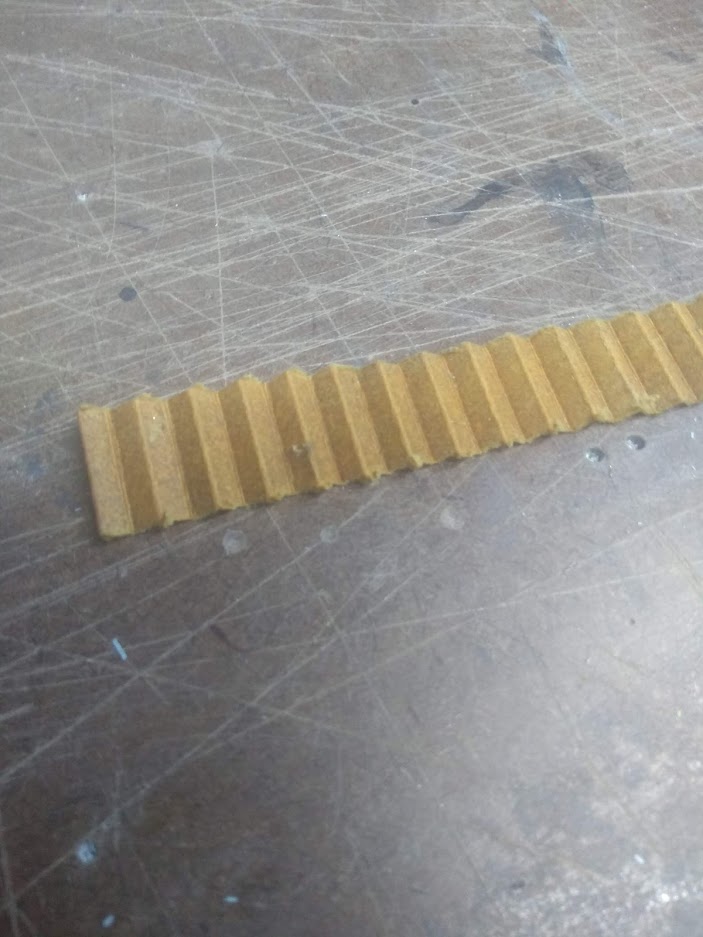
This is what a nearly 100% blocked filter looks like. I can't see anything suspicious.
aeronutSeptember 1, 2019, 8:42pm
Good to hear that the problem is a easy fix.
never surrender; never give-up
PhilSeptember 1, 2019, 10:01pm
I have read somewhere, a cardboard type filter not advisable?
radfordcSeptember 2, 2019, 2:14am
I don't think paper element filters are inherently bad. They do a good job of filtering out very small particles....which is what you want. The main problem with the filter I had was it was too small and I didn't change it out regularly. The new filter is much larger.
TreeTopsTomSeptember 2, 2019, 6:09am
But you still need to get that low pressure sensor installed so this wont happen again.
I too enjoyed learning from your engine out event & your diagnosis of the issue.
And it goes without saying I'm very glad it was essentially a non eventful engine out landing for you. (at least thats the calm way you reported it).
Interesting just how invisible the particles that are clogging the filter are.
It was a small filter but is this an issue of filter size or filter MICRON rating size?
Question I am asking is what is considered a proper micron size for the element? They are (called out ) for that aren't they? TTT
radfordcSeptember 2, 2019, 1:12pm
I have seen filters labeled with micron size, but I've never seen a specification listed for aircraft use? I found this info:
https://www.pegasusautoracing.com/document.asp?DocID=TECH00100Fuel system pre-filter (before the pump): 25 to 400 micron. This filter needs to protect the pump from damage.
Fuel system final filter (after the pump): 1 to 40 micron. High-performance fuel injector manufacturers recommend a 10 micron or finer filter.
General rules of thumb:
For any given size, a coarse filter will flow better than a fine filter. This is why coarse filters are usually recommended for thicker fluids and as pre-filters. Increasing the filter size can (partially) compensate for the lower flow of a finer filter.
In any application, it is hard to go wrong with a coarse pre-filter before the pump with a fine filter after the pump. The fine filter protects the machinery, and the coarse filter protects the pump from damage. The coarse filter will also help to prevent the fine filter from clogging too quickly.