Building and Flying Related Boards › miniMax, Hi-Max, and AirBike General Discussions
Rotax 277 vs Hirth F-33
27 posts
LSaupeSeptember 6, 2019, 11:15am
Anyone here running an F-33 on their Minimax? If so, how has it performed for you? Also, anyone operated both the 277 and F-33 for comparison? Performance, reliability, smoothness?
radfordcSeptember 6, 2019, 1:20pm
I don't have any personal experience with either engine. My friend had a factory built Belite ultralight with a F-33 engine. The engine was very under powered for that plane. Once he had to fly under some high voltage lines a half mile south of the runway because he couldn't climb over them. Twice the plane crashed....stalled and spun on climb out due to lack of enough power. Twenty five HP just wasn't enough.
nathan.bissonetteSeptember 6, 2019, 1:21pm
I found my 1100 in a barn and have been working on getting it ready to fly. It came with a Hirth F-33. Recreational Power okayed it this Winter.
The engine runs but apparently, I haven't got it dialed in right. At 1,000 rpm, it's literally shaking the airplane apart, but above 2,000 rpm, it runs smoothly. Haven't flown yet.
Radfordc's comment concerns me. I hope the engine has enough power. I'm not exactly lean.
radfordcSeptember 6, 2019, 4:17pm
Here is the story of the first crash:
https://jameswiebe.wordpress.com/2014/03/03/crashing-a-belite-airplane/The plane was rebuilt at the factory and the owner continued to fly it. One day he started climbing and the plane stalled just as in the story above. He corrected the spin but ended up hitting a tree and destroying the plane and almost himself.
ulbuilderOctober 24, 2019, 2:11am
I have an F33 on my MiniMax and just flew it for the first time last Saturday. My flight lasted only a few minutes because the CHT kept climbing but it did seem a little underpowered.
Before the first flight the low RPM vibration managed to destroy the bracket supporting the ignition coils. I relocated the coils to the airframe. From 3000 RPM and up it runs pretty smooth, I keep it over 3000 unless I need it lower.
Yesterday I ordered the 'maximal' cylinder head from Recreational Power to address the CHT issue. Maybe I'll have more info to report in a couple weeks.
Here is a video of my flight:
https://youtu.be/jvSQPFkWaEAberagoobruceOctober 24, 2019, 6:13am
Great video. I love the camera work: you've done well to pan the camera, zoom etc while flying at low level.
Your plane looks very good in the air. I thought the AOA looked rather high, but maybe that's just an illusion. What is the shroud thingy just forward of the strut pickup?
Bruce
Bob DalyOctober 24, 2019, 4:17pm
The angle of attack was ok provided the ground was dropping away much faster. Not much reserve lift in that flight regime. Maybe ask the farmer to plow his rows parallel to the runway. Great video and flying.
aeronutOctober 24, 2019, 5:22pm
Great job posting your first flight. Is there a breaking in procedure put out by Hirth. Perhaps as you get a little time on the engine it will become run in better and produce a little more power.
never surrender; never give-up
radfordcOctober 25, 2019, 3:08am
Beautiful plane...but wow, was that a long takeoff roll and slow climb. You may find that on a warm summer day you won't be able to fly.
tdweideOctober 25, 2019, 3:33am
I have to say. F33 has never been on my list. I would rather breaking 103 than risk my life with under power. Super excited to see that flight tho! Great job!
nathan.bissonetteOctober 25, 2019, 6:25pm
Wikipedia says the Rotax 277 weighs 65 pounds and produces 26 horsepower.
Wikipedia says the Hirth F33 weighs 45 pounds and produces 28 horsepower.
Not seeing much advantage for the extra weight. Is this more a matter of confidence in the Rotax brand name?
Bob DalyOctober 25, 2019, 10:49pm
Quoted from nathan.bissonette
The engine runs but apparently, I haven't got it dialed in right. At 1,000 rpm, it's literally shaking the airplane apart, but above 2,000 rpm, it runs smoothly. Haven't flown yet.
Radfordc's comment concerns me. I hope the engine has enough power. I'm not exactly lean.
The idle rpm for the Rotax 277 is 2000. It's likely the same for the F33. Operation below that rpm is ill-advised. Setup your carb so the engine idles at 2000.
Climb angle is determined by surplus thrust and weight. If we assume similar thrust for similar power, R277 v. F33, then it follows that for a given airplane, differences in climb performance are due only to weight. Ulbuilder's plane is certainly heavier than the Minimax R1100 which was designed with the 277 in mind.
nathan.bissonetteOctober 26, 2019, 2:42pm
Thanks, Bob. I wonder if I have my tach set up correctly?
It's an electronic tach with a lead that wraps around one of the spark plug wires (similar to the Tiny Tach). The software gives me choices: 1P1R, 2P1R, etc., depending on the firing pattern of the engine.
I know the engine has two spark plugs in a single cylinder and they both fire every revolution. I know the engine has two magnetos, one for each spark plug wire. I assume the engine generates two sparks per revolution - one for the front plug and one for the back.
The tachometer's sensor wire wraps around one of the spark plug wires. So should I be measuring the sparks in that wire (one per revolution) or the sparks produced by the engine (2 per revolution)? Naturally, the tachometer manual doesn't say.
I selected 2P1R even though the sensor lead only wraps around one spark plug wire. Am I doing it correctly?
Bob DalyOctober 26, 2019, 10:11pm
Quoted from nathan.bissonette
Thanks, Bob. I wonder if I have my tach set up correctly?
It's an electronic tach with a lead that wraps around one of the spark plug wires (similar to the Tiny Tach). The software gives me choices: 1P1R, 2P1R, etc., depending on the firing pattern of the engine.
I know the engine has two spark plugs in a single cylinder and they both fire every revolution. I know the engine has two magnetos, one for each spark plug wire. I assume the engine generates two sparks per revolution - one for the front plug and one for the back.
The tachometer's sensor wire wraps around one of the spark plug wires. So should I be measuring the sparks in that wire (one per revolution) or the sparks produced by the engine (2 per revolution)? Naturally, the tachometer manual doesn't say.
I selected 2P1R even though the sensor lead only wraps around one spark plug wire. Am I doing it correctly?
You would only need to count the spark from one plug since they must fire together. One plug, firing once per rev, 1p1r. If it's wrong, I would think you'd see either double or half the expected reading. The idle setting, the low speed where the engine begins to run smooth, should be 2000 rpm. The maximum will be 6500.
ulbuilderOctober 27, 2019, 3:18am
Quoted from radfordc
Beautiful plane...but wow, was that a long takeoff roll and slow climb. You may find that on a warm summer day you won't be able to fly.
The takeoff roll was long, I think mostly because I did not pull on the stick to rotate. Just accelerated until she lifted up on her own.
The climb was slow, i was keeping the airspeed between 50 and 60. Once I know the actual stall speed I'll see what the climb rate can be but the F33 will likely prove to be a little underpowered for this airplane. Knowing what I know today I would have purchased an F23. But since I already have the F33 I decided to see how it performs and then decide if swapping the engine is necessary or a luxury.
I appreciate the congratulations from everyone. I don't want to hijack this thread with my first flight, just wanted to share my experience with the F33. Weather permitting I should have some useful performance numbers to share soon.
toliver66October 27, 2019, 5:02am
Whats your total weight ready to fly Ace?
ulbuilderNovember 21, 2019, 3:06am
Ready to fly with me and gas is about 590lbs.
The Hirth F33 has a two blade UltraProp II at 60" with 8 degree pitch blocks.
Static RPM is 5700, in flight 5900-6000
Climb rate is 280-320fpm, calculated from GPS.
Stall is 31mph, without flaps.
Full throttle level flight is around 55mph
At 5400 RPM level flight is around 50mph
Seems to climb best around 40-45mph.
The mph figures above are calibrated airspeed
Some other notes on the F-33
My engine is mounted inverted
I use BlueMax oil at 80:1 with ethanol free 91 octane mogas
The stock cylinder head run too hot, had to replace it with the 'maximal' head that cools considerably better.
Under 3000 RPM this thing shakes bad, imagine a bad vibration, double it and you might be close. That said above 3000 RPM it runs really smooth. To avoid the vibration I only go lower than 3000 if needed. Staying above 3000 might be difficult on pavement without brakes, on grass I can idle at 3000 without moving.
The engine came with the dual CDI coils mounted on a bracket behind the cylinder. The vibrations caused multiple cracks in this bracket allowing the coils to flop around and rip wires in half. I moved the coils to the airframe, this seems to be a common suggestion with this engine.
I've seen a few people who had the boot connecting the carb to engine is rip, likely because if the vibration. I've not had this issue but checking it is part of every preflight.
After addressing the issues noted above and getting the carb jetted right she starts easy, runs well and so far has been reliable.
The engine has a total of 10.8 hours, 5.3 in the air.
Bob DalyNovember 22, 2019, 6:17pm
Quoted from ulbuilder
Ready to fly with me and gas is about 590lbs.
The Hirth F33 has a two blade UltraProp II at 60" with 8 degree pitch blocks.
Static RPM is 5700, in flight 5900-6000
Climb rate is 280-320fpm, calculated from GPS.
Stall is 31mph, without flaps.
Full throttle level flight is around 55mph
At 5400 RPM level flight is around 50mph
Seems to climb best around 40-45mph.
Very interesting. So your climb angle is about 0.08 radians or 4.5°. What is your drive reduction ratio? 2.5? With a drive reduction of 2.5 your max thrust should be about 158 lbs. I had calculated a drag for the Minimax at 42 mph of about 102 lbs so the surplus thrust would be 56 lbs and the climb angle should be 56/590 or 0.095 radians or 5.4°. Maybe my drag estimate is a little low but certainly ballpark. You might fair your struts and wheels to improve your climb performance. I'd be interested to learn your observed best glide speed and angle. If we assume best glide is also 42 mph then the glide ratio would be about 102/590 or 0.17 radians or 9.9°.
ulbuilderNovember 23, 2019, 11:52pm
Yes the belt drive is 2.5:1
This video has altitude, ground speed and slope displayed, one trip around the pattern:
https://youtu.be/wYZt4NT_kNQI've been thinking of streamlining the struts, might be a good winter project.
toliver66December 22, 2019, 10:03pm
You have a beautiful Mini Max ulbuilder and I really enjoyed your build vlog and videos. But I was wondering if anyone is running an F-33 on their Minimax that is not 90 lbs over weight? And has been able to achieve these 1030F specifications taken from the Team MiniMax web site?
1030F Specifications
Build time 300-350 hours
Engine Hirth F-33, 28 HP
Fuel Capacity 5 Gallons
Flight controls 3-Axis
Wingspan 25'
Wing area 112.5 sq. ft.
Length 16'
Height 5'
Empty weight 250 lbs.
Gross weight 500 lbs.
Design load factors +4.4 -1.8 G
1030F Performance
Top speed 63 mph
Cruise speed 55 mph
Stall speed 26 mph
Vne 90 mph
Climb rate 650 fpm
Take-off Roll 150 ft.
Landing Roll 180 ft.
JimwingDecember 22, 2019, 11:44pm
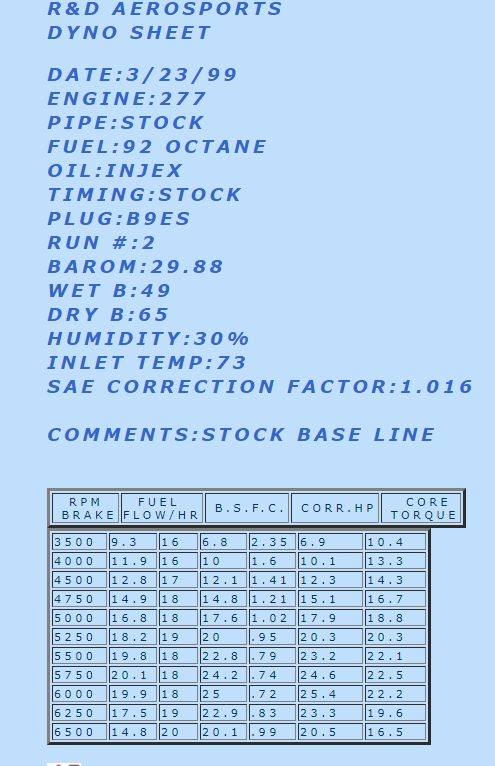
I’m curious, has anyone done a thrust comparison, Hirth versus Rotax single cylinders? I’ve seen many maxes fly with a Rotax 277 and they did pretty well.
I do recall seeing a 277 achieve 200 pounds of thrust. Not too bad for one lunger.
mullacharjakDecember 23, 2019, 12:06pm
I got this from somewhere.No mention of thrust though.
textailwindsDecember 24, 2019, 3:29am
Gyro Jeffro on the WEB is flying a himax now with the F33. You may message him for comparable comparison.
Keith103December 29, 2019, 8:49pm
Quoted from ulbuilder
Some other notes on the F-33
My engine is mounted inverted
I use BlueMax oil at 80:1 with ethanol free 91 octane mogas
The stock cylinder head run too hot, had to replace it with the 'maximal' head that cools considerably better.
Under 3000 RPM this thing shakes bad, imagine a bad vibration, double it and you might be close. That said above 3000 RPM it runs really smooth. To avoid the vibration I only go lower than 3000 if needed. Staying above 3000 might be difficult on pavement without brakes, on grass I can idle at 3000 without moving.
The engine came with the dual CDI coils mounted on a bracket behind the cylinder. The vibrations caused multiple cracks in this bracket allowing the coils to flop around and rip wires in half. I moved the coils to the airframe, this seems to be a common suggestion with this engine.
I've seen a few people who had the boot connecting the carb to engine is rip, likely because if the vibration. I've not had this issue but checking it is part of every preflight.
After addressing the issues noted above and getting the carb jetted right she starts easy, runs well and so far has been reliable.
The engine has a total of 10.8 hours, 5.3 in the air.
I have a question on 2T oil to fuel mix ratio.
On a general basis, what would be ideal fuel to oil mix ratio for 2 cycles ?
I use 40 : 1 and feel I am running with too less of oil.
Recommended per engine mfr for my engine is 20:1 for break-in of new engine and 32: 1 thereafter, which I feel is too much oil.
toliver66December 30, 2019, 12:22am
I always follow the manufacturer's recommended fuel oil mix ratio. I'm no engineer or 2-stroke engine expert but they are and they did all the testing and r&d on the engine they designed and built. So they should know what Oil mix is best for their engine. You could also void you warranty by not following the recommended fuel/oil mix.
Keith103December 30, 2019, 1:00am
Oliver, thanks for the response.
I just read a nice old thread from 2012 about fuel / oil mixture. Surely worth a read :
http://www.lonesomebuzzards.com/cgi-bin/forum/Blah.pl?m-1334327888/s-17/highlight-2t+oil/#num17
toliver66December 30, 2019, 5:25am
Very interesting read indeed, thanks. I was referring to the newer engines like the Hirth F-33 with its Nikasil coated cylinder. Don't want to mess around with that. With an older engine and the newer synthetic lubricants, who knows. You could certainly get away with running less synthetic lube than oil but I would still rather someone else do the r&d.